




Learn Robotic Process Automation Tools & RPA Software
We understand that in today’s digital economy, businesses rely heavily on robotic process automation tools to improve efficiency, accuracy, and scalability. At the same time, we help you master the most powerful RPA software used by global enterprises so you can become an industry-ready automation professional.
Because automation is no longer optional, we ensure that learning the right robotic process automation tools gives you a clear career advantage. Therefore, our training programs focus on both conceptual clarity and hands-on expertise across leading RPA software platforms. As a result, learners confidently handle real-world automation workflows after course completion.
What Are Robotic Process Automation Tools?
Robotic process automation tools are software platforms that use digital bots to automate repetitive, rule-based business processes. In practice, these tools interact with applications the same way humans do—by clicking, typing, copying data, and triggering actions—without changing existing systems.
As a result, modern RPA software enables organizations to:
Reduce manual effort
Improve accuracy and compliance
Increase process speed
Scale operations efficiently
At RPA Quest, we focus on helping you understand how these robotic automation tools operate at both a technical and business level. Therefore, you gain a complete perspective on automation implementation and real-world value.
Fill This Form
Automation RPA Tools Covered at RPA Quest
We provide hands-on exposure to the best robotic process automation tools used by top enterprises worldwide. To ensure real-world readiness, our RPA tools list is carefully curated to match current industry requirements and enterprise automation standards.
As a result, learners gain practical experience across multiple RPA software platforms, enabling them to confidently work on diverse automation projects. Our training covers top RPA tools, including:
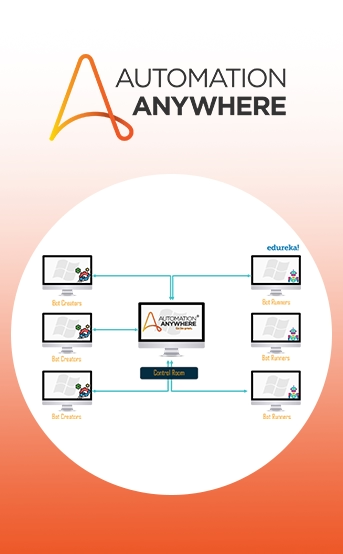
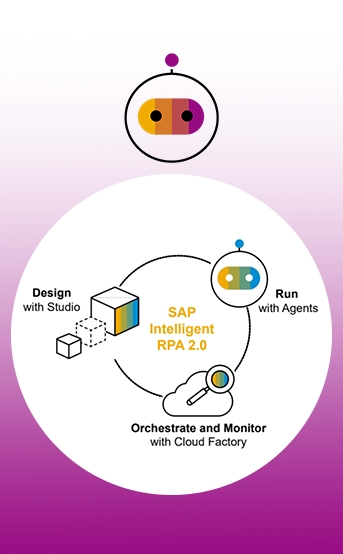
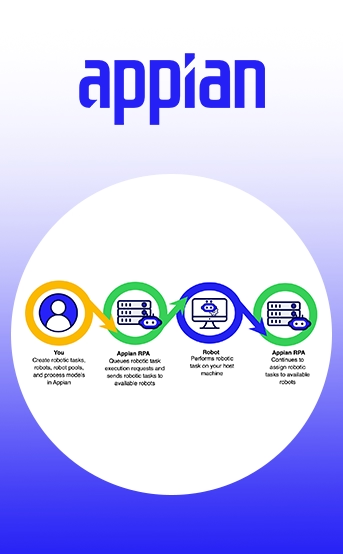
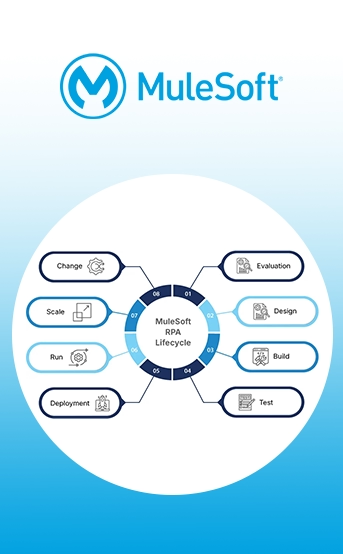
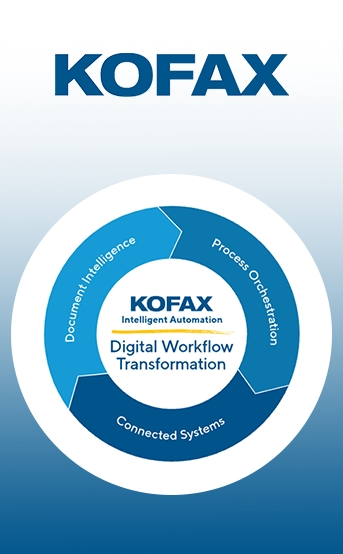
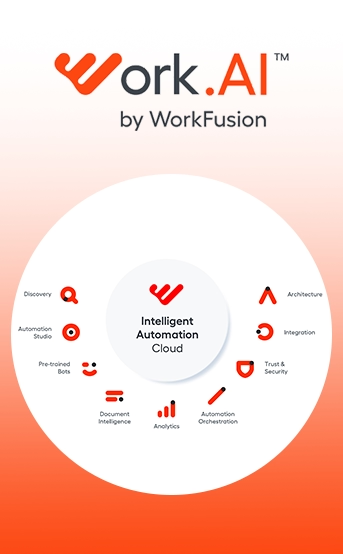
Therefore, by learning across this complete RPA software platforms ecosystem, you develop end-to-end automation expertise aligned with enterprise needs. Ultimately, this practical exposure prepares you to work confidently with modern automation, AI-driven workflows, and scalable digital systems.
Categories of RPA Software Covered at RPA Quest
At RPA Quest, we categorize robotic process automation tools based on how they are used in real business environments. This structured approach helps learners and enterprises choose the right RPA software for their specific automation needs.
Enterprise RPA Software Platforms
To begin with, enterprise RPA software platforms are designed for high security, scalability, and governance. Therefore, global organizations rely on them to manage complex automation ecosystems efficiently.
These platforms typically support:
Centralized bot management
Role-based access control
Advanced analytics and logging
Low-Code and No-Code RPA Tools
In addition, many modern robotic automation tools are built for speed and accessibility. As a result, business users and analysts can create automation workflows with minimal or no coding effort.
Such no-code RPA tools are ideal for:
Rapid automation deployment
Department-level automation
Business-led digital transformation initiatives
Intelligent Automation Tools
Moreover, advanced intelligent automation tools combine RPA with AI, machine learning, and data-processing capabilities. Consequently, bots can handle semi-structured data, make intelligent decisions, and process documents effectively.
This category of RPA automation software is increasingly used in:
Invoice processing
Email and document handling
Data extraction and validation
Why Choose RPA Quest to Learn RPA Tools?
Since 2017, RPA Quest has consistently focused on bridging the gap between automation technology and real-world, practical skills. As a result, our expertise in robotic process automation tools is firmly grounded in genuine enterprise requirements and continuously evolving industry standards.
What truly defines our approach to RPA tools knowledge includes:
Industry-aligned tool selection, based on current enterprise adoption and demand
Practical, use-case-driven learning, ensuring tools are applied in real automation scenarios
A strong focus on scalability and governance, critical for enterprise-grade automation success
Continuous curriculum updates, aligned with emerging RPA software trends and technologies
Therefore, learners gain skills that remain relevant beyond certifications, while organizations benefit from automation-ready professionals. Ultimately, this approach ensures both individuals and enterprises stay future-ready in an automation-driven digital landscape.
Frequently Asked Questions
What are robotic process automation tools?
Robotic process automation tools are software platforms that use digital bots to automate repetitive, rule-based business tasks by interacting with applications just like a human user.
What is the difference between RPA tools and RPA software?
RPA tools usually refer to individual automation platforms, while RPA software includes the complete automation ecosystem such as bots, control rooms, analytics, and management features.
Which robotic process automation tools are most widely used?
Popular robotic process automation tools include UiPath, Automation Anywhere, Blue Prism, and Microsoft Power Automate, all widely adopted by global enterprises.
Are robotic automation tools only used by large enterprises?
No. While large enterprises use enterprise RPA software extensively, small and mid-sized businesses also adopt robotic automation tools for efficiency and cost reduction.
Why is understanding RPA tools important for automation careers?
Automation careers depend on strong tool knowledge. Understanding robotic process automation tools enables professionals to design, deploy, and manage scalable automation solutions effectively.